Australia Student Visa Crisis: Bridging Visas Explained
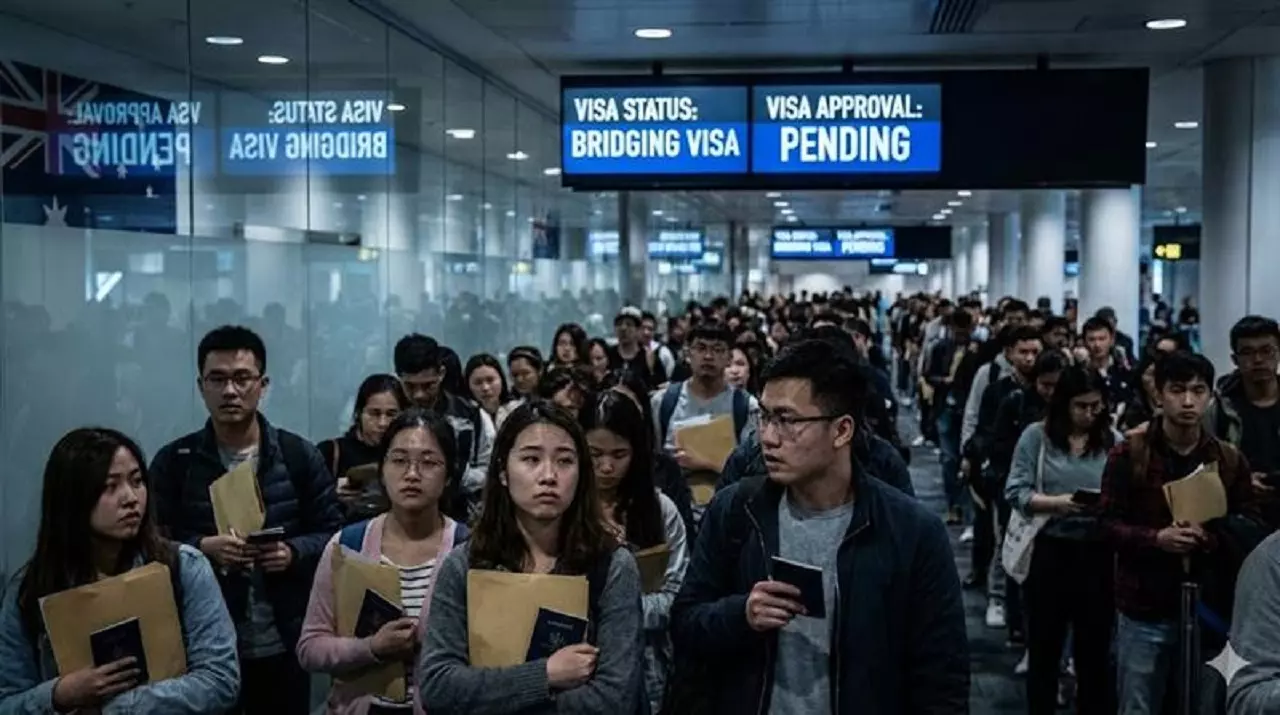
Synopsis: Australia’s international student system is under severe strain as bridging visas surge and non-genuine study pathways expand. This analysis examines how course-hopping, weak enforcement, and delayed reforms have turned education visas into a low-cost labour channel, threatening migration integrity, wages, and social cohesion.
Australia’s Student Visa Crisis: How Bridging Visas, Course-Hopping, and Policy Failures Are Reshaping Migration
Australia’s international education model—once regarded as a global benchmark—is now facing one of its most serious credibility crises. A sharp rise in bridging visas, asylum claims from former students, and widespread course-hopping has revealed structural weaknesses that successive governments failed to confront. According to data and expert analysis, what was designed as a temporary education pathway is increasingly functioning as a long-term work access mechanism, raising urgent questions about enforcement, fairness, and national interest. The scale of this shift is now impossible to ignore, as outlined in official reporting and policy commentary from the Australian government and experts cited by the Department of Home Affairs.
This is no longer a marginal issue affecting a small subset of applicants. It is a system-wide distortion with implications for labour markets, universities, migration integrity, and social cohesion. How did Australia reach this point—and why has corrective action been so slow?
Understanding the Policy/Event
Australia’s student visa framework allows international students to study while working limited hours during academic sessions. In principle, this balances education access with labour protections. In practice, however, a series of loopholes have enabled prolonged stay and unrestricted work rights through bridging visas, appeals, and asylum claims.
Bridging visas were intended as short-term administrative tools, allowing applicants to remain lawfully in Australia while awaiting visa outcomes. Over time, they have become something very different: a gateway to multi-year work access without meaningful study obligations.
Why It Is Happening
Several interconnected policy failures explain this outcome:
- High approval rates for public university student visas, making them the easiest entry point
- Weak monitoring of enrolment compliance and attendance
- Lengthy processing and appeal timelines, particularly at review tribunals
- Automatic work rights attached to bridging visas
- Lack of enforcement against repeat onshore applications
Together, these elements created a system where time—not merit—became the most valuable asset. For non-genuine students, delays are not a deterrent; they are the incentive.
Key Reforms or Changes
Despite mounting evidence, Australia has been slow to implement decisive reforms. While recent rhetoric signals concern, most structural weaknesses remain intact.
At the core of the problem is course-hopping: the practice of enrolling in one program, withdrawing early, and reapplying to another—often cheaper—course while remaining onshore.
Detailed Breakdown
The commonly observed pathway operates as follows:
- Initial enrolment at a public university
Public universities enjoy higher visa approval rates, making them ideal entry points.
- Early withdrawal or non-completion
Dropout rates exceed 30% at several institutions, with some far higher.
- Switch to a low-cost private college
Hospitality, cooking, and vocational courses are common choices.
- Bridging visa issuance during processing
Applicants receive full work rights while waiting—often for months.
- Appeal if refused
Appeals to the Administrative Review Tribunal extend lawful stay and work access even further.
- Asylum application as a final delay mechanism
Even when unsuccessful, asylum claims can prolong stay by years.
Each step is technically lawful. Collectively, they undermine the intent of the student visa system.
Data, Stats, and Trends
The numbers illustrate just how far the system has drifted from its original purpose.
Between Q3 2019 and Q3 2025, the number of bridging visas on issue increased by more than 201,300. This growth has been driven overwhelmingly by former international students.
What the Numbers Show
Key data points include:
- 107,274 former students on bridging visas as of mid-2025
Up from just 13,034 in 2023
- Over 10% of all international students now on bridging visas
- Median wait times
Course change approvals: ~28 weeks
Tribunal appeals: ~64 weeks
- More than 42,000 course-hopping cases pending
Over one-third of total tribunal caseload
Nationality data reveals further concentration. Excluding New Zealand citizens, Indian nationals now hold the largest share of temporary visas in Australia—surpassing Chinese nationals, who held that position six years earlier. This shift reflects broader changes in global student flows but also exposes uneven risk management.
According to labour market and migration analysis from Antipodean Macro, Indians also dominate new bridging visa grants, far outpacing every other source country.
Impact Assessment
The consequences of this system extend far beyond immigration administration. They affect wages, housing, education standards, and social trust.
Social, Economic, and Human Consequences
Former senior immigration official Abul Rizvi has warned that the current trajectory risks creating a large, insecure underclass—people with work rights but no long-term stability, bargaining power, or pathway clarity.
Economic impacts include:
- Downward pressure on wages, particularly in hospitality and delivery sectors
- Exploitation of migrant labour, due to insecure legal status
- Distorted education markets, where enrolment replaces learning
- Housing pressure, especially in metropolitan areas
Universities also play a role. Many institutions—particularly those operating satellite city campuses—benefit financially even when students disengage academically. Roughly half of these campuses are run by for-profit contractors, creating misaligned incentives.
As sociologist Salvatore Babones argues, the system rewards enrolment churn rather than educational outcomes.
Political Background & Stakeholder Reactions
Successive governments have acknowledged problems while avoiding politically difficult solutions. Education exports generate billions in revenue, and tightening rules risks short-term economic fallout.
Government, Opposition & Expert Opinions
Government responses have largely focused on processing backlogs rather than root causes. Meanwhile, experts across the political spectrum agree that enforcement—not access—is the missing piece.
Media investigations by News.com.au have highlighted the surge in asylum claims lodged by former students, adding public pressure for reform.
Babones proposes a simple rule:
Students who withdraw from their initial program should be required to leave Australia and reapply from offshore for any future study.
This single measure would:
- End course-hopping incentives
- Reduce tribunal congestion
- Restore the integrity of student visas
- Be simple to enforce automatically
Global Comparisons
Australia is not alone in grappling with student visa misuse, but its response stands out for its permissiveness.
Where This Stands Internationally
Comparative approaches show stark contrasts:
- Canada limits work rights more strictly during appeals
- The UK enforces attendance monitoring more aggressively
- New Zealand restricts onshore visa switching
Australia’s approach—granting near-unrestricted work rights during prolonged administrative delays—is unusually generous.
According to education policy analysis from the University of Sydney, international study systems function best when migration pathways are clear, limited, and transparent—not improvised through loopholes.
Critical Analysis
At its core, this debate forces a fundamental policy choice.
Will It Work?
Australia must decide whether it wants:
- A genuine international education system, or
- A de facto low-cost migrant labour program
The current hybrid achieves neither effectively. It undermines education quality while failing to provide fair, regulated labour migration.
If Australia genuinely requires migrant labour for essential services, experts argue it should introduce a formal guest worker program—transparent, regulated, and decoupled from education.
As Babones bluntly states, international study should not function as a wage-suppression mechanism.
Conclusion
Australia’s student visa crisis is not the result of a single policy error, but of prolonged inaction, misaligned incentives, and an unwillingness to confront uncomfortable trade-offs. The surge in bridging visas, course-hopping, and prolonged work access reveals a system operating far from its stated purpose.
Reform is still possible—but only if policymakers prioritise integrity over volume, enforcement over optics, and long-term social cohesion over short-term revenue. Without decisive action, Australia risks losing both the credibility of its education sector and public confidence in its migration system.
The question is no longer whether the system is broken. It is whether Australia is prepared to fix it.